

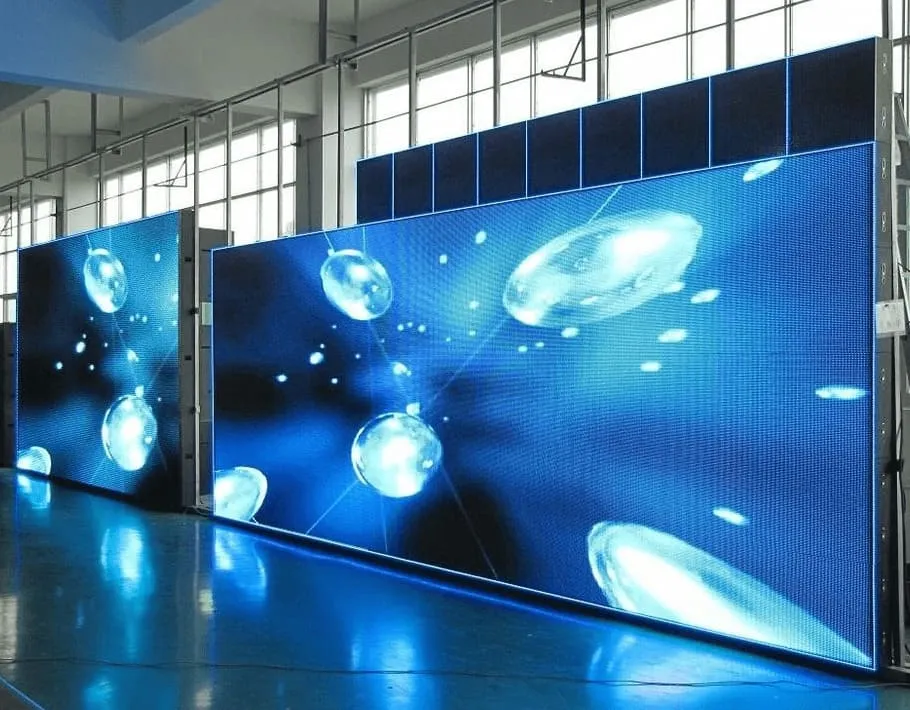
LED display panels have become the standard visual centrepiece for stages, event backdrops, retail spaces, and worship halls across Singapore. They’re brighter, more flexible, and more cost-effective over time than traditional projection screens, which is why more venues are moving away from rented screens and toward permanent LED wall installations. This guide covers what LED display panels are, what to consider before installing one, and how to choose a stage lighting equipment supplier who can deliver a reliable, long-term setup.
What Is an LED Display Panel?
An LED display panel, sometimes called an LED wall or LED video wall, is made up of individual modular tiles, each containing hundreds or thousands of tiny LEDs, that are joined together to form one large, seamless screen. Unlike a single television or monitor, an LED wall can be built to almost any size or shape, since panels are simply added or arranged to fit the available space. This modularity is what makes LED walls so popular for stages, auditoriums, and event backdrops, where screen size and shape need to be tailored to the venue rather than the other way around.
Why Venues Are Choosing LED Walls Over Traditional Screens
- Brightness: LED panels are far brighter than projected screens, which means they remain clearly visible even in venues with strong ambient or stage lighting, something traditional projectors struggle with.
- Flexibility of size and shape: Because LED walls are built from modular tiles, they can be configured into unusual shapes, curved backdrops, or oversized displays that a fixed projector screen simply cannot replicate.
- Durability and long-term cost: While the upfront cost of an LED wall is higher than a projector, panels are built for long service life with minimal maintenance, making them more economical over years of regular use, particularly for venues that run events frequently.
- Reliability: LED walls don’t suffer from the focus drift, bulb replacement, or throw-distance limitations that come with projectors, making them a more dependable choice for permanent installations.
Key Considerations Before Installing an LED Display Panel
- Pixel pitch: This refers to the distance between LED clusters on the panel and determines resolution. A smaller pixel pitch means a sharper image up close, which matters more for spaces where the audience sits close to the screen, such as retail displays or small meeting rooms, compared to large auditoriums where viewers are further back.
- Viewing distance and venue size: The right pixel pitch and panel size depend heavily on how far your audience typically sits from the screen. A supplier should be able to recommend the right specification based on your venue’s layout, not just sell you the largest or most expensive option.
- Indoor vs. outdoor rating: Panels used outdoors need higher brightness and weatherproofing (commonly rated IP65) to remain visible and durable against the elements, while indoor panels can prioritise finer pixel pitch and colour accuracy instead.
- Content and control systems: An LED wall is only as useful as the system controlling what’s displayed on it. Make sure your supplier also provides or integrates a reliable video processor and content management setup suited to your use case, whether that’s live event visuals, presentations, or continuous branding loops.
- Permanent installation vs. rental: For venues that host events regularly, such as auditoriums, churches, or retail spaces, a permanent LED wall installation is usually more cost-effective long-term than repeatedly renting screens for each event.
What to Look for in a Stage Lighting Equipment Supplier
Because LED walls are usually installed alongside stage lighting and audio systems, the strongest results come from working with a single supplier who understands how all three elements work together, rather than coordinating separate vendors for lighting, sound, and display. When evaluating a stage lighting equipment supplier for an LED wall project, consider:
- A track record with permanent installations, not just short-term event rental, since a wall installed for long-term use requires different planning, mounting, and cabling considerations than a temporary setup.
- Experience across a range of venue types, from schools and auditoriums to worship halls, restaurants, and retail spaces, since each has different lighting conditions, ceiling structures, and audience layouts.
- The ability to supply complementary lighting and audio equipment, so your LED wall, stage lighting, and sound system are specified and installed as one cohesive system rather than three disconnected purchases.
- Authorised dealership status with reputable brands, which typically means better product support, warranty coverage, and access to genuine parts if something needs servicing down the line.
- After-sales support and scalability, so you can expand your display, add lighting fixtures, or upgrade components later without needing to replace the entire system.
SL Pro Group: LED Display Panels and Stage Lighting Equipment in Singapore
At SL Pro Group, we supply and install complete LED wall display systems as part of our broader stage lighting, sound, and AV solutions across Singapore. As an authorised Bose Professional dealer and supplier of Clair Lighting stage equipment, we help venues bring together display, lighting, and sound into one integrated system, rather than treating each as a separate purchase.
We work with schools and auditoriums, churches and worship halls, restaurants and cafés, country clubs, entertainment venues, and retail spaces, delivering permanent installations designed for long-term reliability rather than one-off event rental. Whether you’re planning a new LED wall for a stage backdrop, upgrading an ageing projector setup, or building a complete AV system from the ground up, our team can advise on the right panel specification, lighting integration, and installation approach for your venue.
